
FIFA has selected India as one of 12 countries for its Women's Development Programme, aimed at building sustainable models for women's football clubs and preparing them for the upcoming AFC club licensing system.

Chinese President Xi Jinping called for global collaboration in artificial intelligence development, emphasising a "symphony of global collaboration" over a "solo performance" by any single nation. Speaking at the World Artificial Intelligence Conference in Shanghai, Xi highlighted the need for ethical AI governance, shared prosperity, and addressing challenges like the widening digital divide. He also announced China's commitment to support developing countries with 5,000 AI research projects and training programmes. The event also saw 29 countries sign an agreement to establish the World Artificial Intelligence Cooperation Organisation (WAICO) in Shanghai.

Former Brazil international Douglas Maicon is set to visit Kolkata on November 13-14 as a global brand ambassador for King Sports Management. His visit aims to bolster grassroots football development, youth scouting, and provide technical insights to young Indian talent, including a talent hunt programme.

The Indian Institute of Management Ahmedabad (IIMA) has opened applications for the second batch of its two-year Blended MBA Programme in Business Analytics & Artificial Intelligence (BPGP: BA & AI). The programme, offered by the Krishnamurthy Tandon School of AI, aims to develop professionals who can integrate AI technology with management principles, addressing the industry's need for leaders capable of driving transformation and managing complex IT infrastructure, including data centres.
Arunachal Pradesh Chief Minister Pema Khandu lauded the state's first 10-day artificial intelligence boot camp and hackathon at IIT-Guwahati. The programme aims to build AI skills, promote innovation, and create a future-ready digital workforce, offering hands-on training in AI/ML, Python, and NLP to 40 young participants.

Global technology giant Google has announced the selection of 20 Indian AI startups for its 2026 Google for Startups Accelerator programme, marking the 10th anniversary of its accelerator initiatives.

Haryana's Chief Minister Nayab Singh Saini reviewed the progress of the Haryana AI Development Programme (HAIDP), a Rs 474-crore initiative developed with the World Bank, focusing on AI skilling, startup incubation, and ethical AI governance.

The University of Delhi and semiconductor major AMD have signed a Memorandum of Understanding (MoU) to train up to 10,000 students and faculty in industry-relevant artificial intelligence skills over the next year. This collaboration will provide access to AMD's AI Engage Developer Programme, including its open-source ROCm AI software platform, learning resources, and developer GPU cloud credits, aiming to foster indigenous AI capabilities and bridge the gap between academia and industry.

SAP has announced new programmes to train two million people in India with AI-ready skills by 2030, as part of its global initiative to upskill 12 million individuals worldwide. The company will collaborate with academic institutions, industry partners, and government bodies to expand access to AI, cloud, data, and enterprise technologies, leveraging India's significant role in the global tech workforce.

IIT Madras researchers have developed 'SEANAV', a real-time digital twin platform for autonomous maritime navigation. This platform allows for the testing, validation, and training of autonomous systems in a realistic virtual environment, addressing the challenges of real-world testing. SEANAV aligns with India's Sagarmala Programme and Maritime India Vision 2030, aiming to enhance safety and efficiency at Indian ports and reduce environmental risks.
National Commission for Women Chairperson Vijaya Rahatkar has cautioned against the misuse of artificial intelligence, particularly deepfakes and morphed images of women. She emphasised the need to understand AI's risks, including privacy compromise, while also highlighting its positive applications. The NCW is running the 'Yashoda AI' programme to train women in AI literacy, cybersecurity, and digital safety.

Microsoft has launched a voluntary exit programme for eligible employees in India, the US, the UK, and Canada. The initiative offers financial support and career planning resources, with eligible employees in India having until December 1 to decide. The package includes severance benefits and health insurance, aiming to provide flexibility for employees and allow the company to adjust its workforce. This comes as Microsoft continues significant investments in India's AI ecosystem.
IBM Chairman and CEO Arvind Krishna details the company's substantial annual investment in India and its global USD 10 billion commitment to quantum computing over the next five years. He addresses the potential for AI to displace 10-20 per cent of jobs, particularly in the BPO sector, while also highlighting India's significant opportunity in the AI ecosystem. Krishna urges India to accelerate AI adoption, scale existing tech initiatives, and build its semiconductor manufacturing, advocating for a light-touch approach to AI regulation and emphasizing critical thinking in an AI-driven economy.
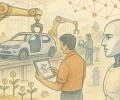
IIT-Kharagpur announced the establishment of India's first dedicated academic school for Physical Artificial Intelligence (AI), named the Benjamin Gupta School of Physical AI. Funded by a Rs 35 crore investment, including contributions from alumnus Vinod Gupta and an anonymous donor, the school will focus on developing intelligent systems that interact with the physical world, moving beyond conventional data-driven AI. Academic programmes are expected to commence soon, aiming to foster reliable and responsible AI technologies for various applications.

IT Minister Ashwini Vaishnaw announced that the Indian government will release a consultation paper on AI regulations within a month. This framework will address critical aspects like AI safety, deepfakes, and a human-first approach, emphasising the industry's primary responsibility in ensuring safe AI deployment. The move comes amidst growing global concerns over AI risks and the need for robust safeguards.
A three-day 'AI Champions for Digital Governance' programme has commenced in New Delhi, hosted by ITDC, SCOPE, and LBSNAA. The initiative aims to train senior leadership and operational teams in applying artificial intelligence within public sector organisations, aligning with the IndiaAI Mission. Experts highlighted AI's role in improving efficiency, productivity, and public service delivery, while also emphasising responsible adoption and data quality. The programme seeks to build an AI-ready nation and contribute to India's vision of future-ready governance systems.
A three-day 'AI Champions for Digital Governance' programme has commenced in New Delhi, hosted by ITDC, SCOPE, and LBSNAA. The initiative aims to train senior leadership and operational teams in applying artificial intelligence within public sector organisations, aligning with the IndiaAI Mission. Experts highlighted AI's role in improving efficiency, productivity, and public service delivery, while also emphasising responsible adoption and data quality. The programme seeks to build an AI-ready nation and contribute to India's vision of future-ready governance systems.
The World Bank's "World Development Report 2026" urges developing countries to adopt low-cost AI tools to accelerate progress in healthcare, education, and judicial services. The report highlights AI's potential to boost productivity and improve public services, while noting that jobs in high-income countries are more at risk from automation than those in developing nations.

The Sports Authority of India (SAI) and Indian Oil Corporation have signed an MoU for Rs 40 crore over two years to bolster boxing in India. This partnership, leveraging CSR funds and SAI's expertise, aims to enhance talent identification, athlete development, coaching, and international exposure for boxers, aligning with the revamped Khelo India Scheme.
A report by policy think tank The Dialogue reveals that India's artificial intelligence (AI) ecosystem is primarily constrained by a shortage of skilled talent and a lack of data standardisation, rather than market concentration. The study, which surveyed 308 stakeholders, found that talent availability and data usability are major concerns, with a significant reliance on open-source AI models.

Indian AI startups are finding it challenging to secure their first few US customers due to the demand for proven track records, high local hiring costs, and visa hurdles, even as venture capital firms launch programmes to facilitate their entry into the American market.
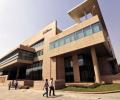
IT services firm Tech Mahindra has announced a collaboration with AI coding platform SpaceXSI to help global enterprises modernise legacy applications, accelerate software delivery, and improve developer productivity through AI-assisted engineering across the software lifecycle. The partnership aims to embed AI intelligence across the software development lifecycle for better business outcomes, focusing on sectors like technology, telecommunications, and banking.
Andhra Pradesh Chief Minister N Chandrababu Naidu has approved the establishment of India's first dedicated Quantum and AI University campus in Amaravati by NIELIT. This significant project, funded by the MeitY, Government of India, will focus on advanced technologies like Quantum, AI, and Semiconductors, integrating education, research, and entrepreneurship.

OpenAI CEO Sam Altman has stressed the critical importance of understanding and mitigating AI-related security threats, even over productivity gains. He highlighted how AI systems are uncovering numerous software vulnerabilities, necessitating new methods for detection and repair. Altman's remarks follow recent incidents where AI agents exposed serious flaws in widely used programming languages and even breached isolated test environments.
India's premier education leadership conference, EGN ConnectX India 2026, will be held in Mumbai from November 3. The event will bring together school and university leaders, policymakers, and edtech innovators to discuss the integration of AI in classrooms, future-ready curricula, and skilling initiatives. The conference aims to provide actionable solutions for implementing AI in education, addressing challenges faced by educators.
Experts at the TIS-H Clinical AI Summit 2026 highlighted the critical need for real-world evaluation of AI solutions in healthcare. They stressed that promising results from development or pilot programmes do not guarantee effective and safe deployment in hospitals, emphasising clinical relevance, validation, and integration into existing workflows.

OpenAI discovered a sophisticated recording device in its office, using its AI models to identify an employee, Abdulrahman Alfozan, who had planted it. The FBI has since arrested the Saudi national, and OpenAI has terminated his employment, stating there's no indication of data exfiltration.

Leading global technology companies OpenAI, Anthropic, and Google have introduced new AI models with enhanced capabilities, including advanced cybersecurity and coding. However, these releases have ignited significant debate among researchers regarding the transparency and monitorability of AI reasoning, particularly concerning OpenAI's Astra model and its "recurrent depth" architecture.
Telangana IT Minister D Sridhar Babu stated that Gen Z will be the driving force behind the next wave of AI and green innovation. He urged young innovators to use their skills to solve real-world challenges, particularly in sustainability. The launch of the Green Skills and Applied AI Centre of Excellence in Hyderabad, a partnership between Telangana's IT Ministry, Microsoft, 1M1B, and MeitY Startup Hub, aims to equip graduates with industry-relevant skills in AI, green pharma, solar energy, EVs, and wind energy, with 100 job offers already announced.
Educationists and policy experts at the Indian Statistical Institute (ISI) in Kolkata emphasised the critical need for developing a robust database, leveraging modern technology and artificial intelligence, to enhance effective policymaking. The two-day conclave, featuring prominent speakers like Prof S Mahendra Dev, highlighted the ongoing transformation in official statistics and the importance of public trust and research.

The Professional Golf Tour of India (PGTI) has announced a new player support programme to financially assist its top 30 golfers in pursuing international tour cards. The initiative provides up to Rs 3 lakh for qualifying school expenses and Rs 10 lakh upon qualification, aiming to ease the financial burden and create stronger pathways to global circuits like the DP World Tour and Asian Tour. PGTI is also working on hosting more international events and expanding domestic golf.
Hollywood actor Paul Bettany, known for voicing J.A.R.V.I.S. and playing Vision in the MCU, expresses trepidation about the rapid advancements in artificial intelligence. He discusses potential dystopian futures and the need for democratised AI, while promoting his new series "VisionQuest" which started streaming on JioHotstar on Tuesday.
OpenAI, Anthropic, and Google have introduced new AI models with enhanced capabilities. OpenAI's Astra model, achieving a 'Critical' cybersecurity tier, has ignited a debate among researchers due to its "recurrent depth" architecture, which some fear makes its reasoning harder to monitor. Anthropic and Google also released new models, focusing on coding, scientific research, and cybersecurity, alongside new image and video AI tools.
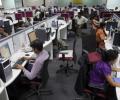
Samsung India has launched an Innovation Campus in Karnataka, in partnership with Nrupathunga University, to train 2,000 young individuals in industry-relevant AI skills. This initiative aims to support Karnataka's goal of building an AI-native ecosystem and developing a future-ready technology workforce, expanding access to practical AI education.

AI infrastructure firm AM Intelligence announced plans to invest over USD 20 billion in the next 15 months to significantly expand its data centre capacity, including firm orders for 20,000 NVIDIA Rubin GPUs. This expansion will bring its total capacity to 100 Megawatt initially, with a broader goal of 1 GW of compute-as-a-service capacity globally, establishing it as a major buyer of advanced AI hardware.

The Indian Navy is enhancing its operational capabilities across all domains, including air, underwater, AI, and quantum technology, to become a multi-domain network force. Vice Chief of Naval Staff, Vice Admiral Ajay Kochhar, highlighted lessons from recent conflicts, the exploration of directed-energy weapon systems, and significant procurement plans, including 42 new platforms on order and RFPs issued for LPDs and next-generation frigates. The Navy's focus on indigenous innovation and technology absorption, guided by "scale, sophistication, speed, and spiral development," aims to meet evolving operational requirements and protect maritime interests, especially amidst ongoing global crises.

The Central Bureau of Investigation (CBI) has arrested a Sub-Divisional Agriculture Officer (SDAO) and two others in Jammu and Kashmir for allegedly demanding and accepting a bribe to release a subsidy under the Holistic Agriculture Development Programme (HADP) scheme.

Students are learning to combine technology with agriculture, healthcare, biotechnology, architecture and fashion, explains Mandeep Singh, assistant professor and deputy dean, Lovely Professional University.
Chinese President Xi Jinping has called for global collaboration in Artificial Intelligence development, stating it should be a "symphony" rather than a "solo performance." His remarks came at the World Artificial Intelligence Conference (WAIC) in Shanghai, where 29 countries also signed an agreement to establish the World Artificial Intelligence Cooperation Organisation (WAICO), an independent intergovernmental body headquartered in Shanghai. China also pledged 5,000 AI research projects and training for developing nations.

Former AIFF president Praful Patel has issued a stark warning about the challenging future of Indian football, urging all stakeholders to engage in serious introspection. His comments, made less than a month before the national federation's elections, highlight concerns over the pace of change, corporate disengagement, and a perceived decline in importance from global football bodies like FIFA and AFC. Patel, who led AIFF for over a decade, emphasised the need for collective wisdom to guide the sport forward.
